
We regularly come across authentic antique items from the Art Nouveau era. We used to search the internet for ready-made 3D models, but everything we found was far from perfect. Take a look at this woman’s face and tell us what century her cartoonish cheekbones and nose are from.
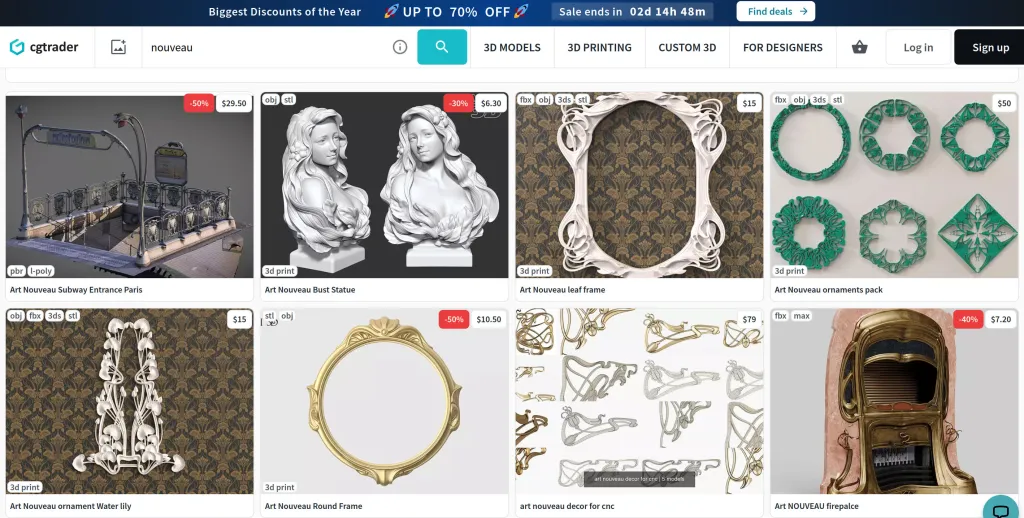
And that’s the best we could find. Photogrammetry is completely unsuitable for real work, even with all the much-hyped AI tools. Just like with making children, we had to do everything ourselves again. We set up 3D scanning of real antique items. It’s a very long and laborious process. Scanning even the first item, a napkin holder, took more than 50 hours of scanner time. And then there was the processing time. This explains the relatively high prices of the 3D models we offer.
What we do and how we do it: virtual cuts are made into layers using a specially devised method –
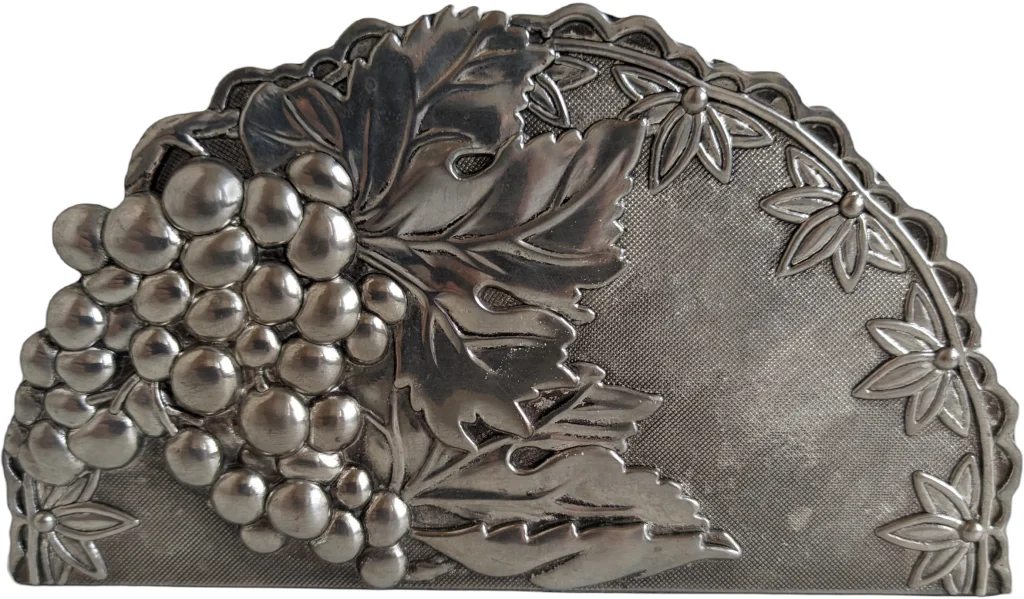


The shape of the product edge is calculated in three coordinates: X-Y-Z. This creates a point cloud with high accuracy. Then, a mesh is created from the point cloud, and a surface and 3D body are created from the mesh. Perhaps our skills in creating 3D bodies are not as good as yours, so in this case, we provide the buyer not with the 3D body we created ourselves, but with the “source code” — the original point cloud. In fact, this is the most valuable part — the source code, the original point cloud. This allows you to make changes to the model if necessary. This model will be useful when creating new furniture items—wall panels, door frames, sofas, chairs, headboards, and other similar items.
These 3D models do not make sense to print on a 3D printer on their own. We scan and create models on a 1:1 scale, and these can be quite large. Our models are useful for those who want to use fragments of authentic antique items in new products (rather than the amateurish creations in Blender shown in the pictures above). In other words, our models are needed and useful for professionals. We create models based on antique originals, with all the marks that time has left on the items, and we see no need to correct (remove) these marks of time.
The small surface of the napkin holder consists of approximately 300,000 points; this is our first work in the field of tremor scanning. The second work was a small but very pleasant WMF saucer (compare it with the pseudo-Art Nouveau form of the woman shown above).
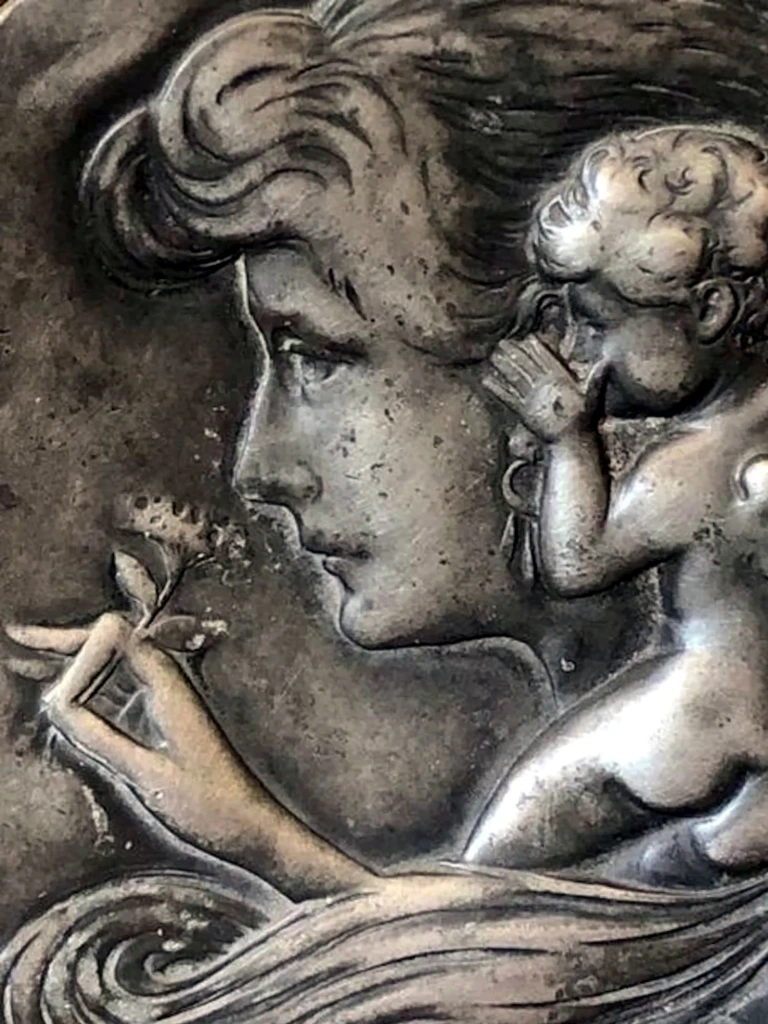
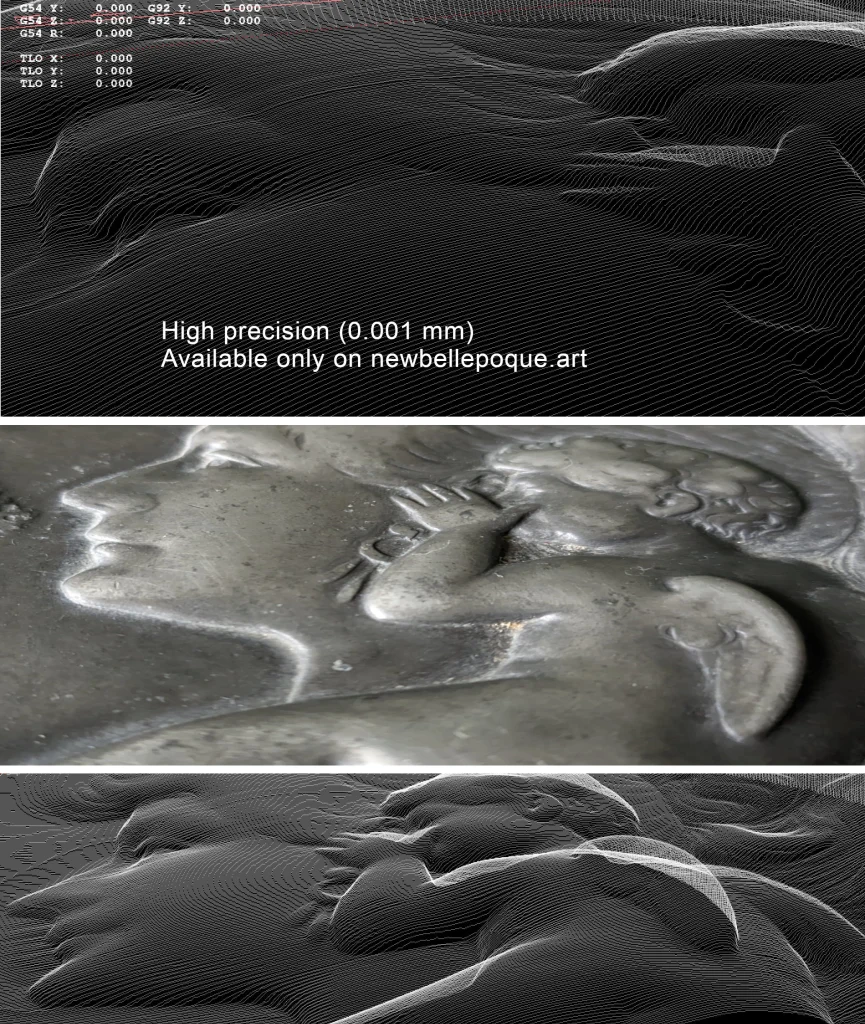
The complexity of this project lay in the need to take into account the softness of Britannia alloy, which is very soft. In addition, the item was silver-plated and covered with patina. Nothing could be damaged.
Then fragments of carved decoration from a wooden cabinet –
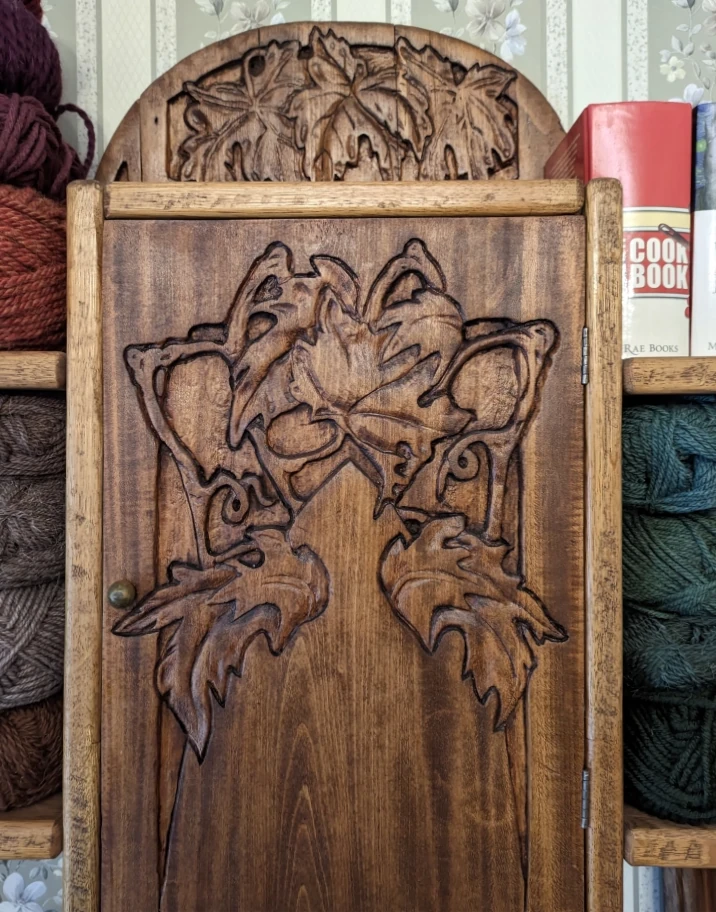
And then other models will appear as they come into our hands.